
What is process management?
Definition, methods and software support
Unclear workflows, unnecessary process steps, and procedures that vary from one department to another? Structured process management helps companies make their business processes transparent, optimize them systematically, and improve efficiency. This makes it easier to identify bottlenecks, clarify responsibilities, and continuously improve workflows.
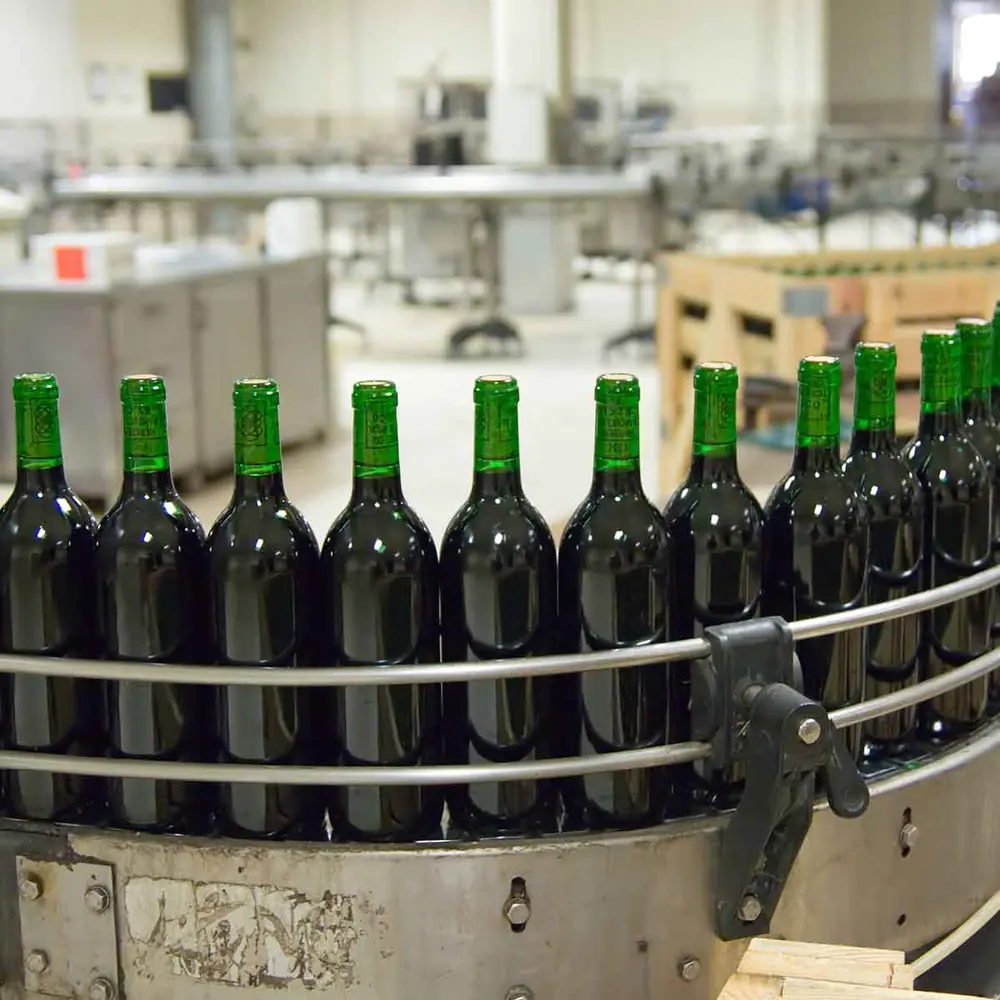
Process management describes the systematic design, control, monitoring and continuous improvement of business processes. The goal is to make workflows in the company more transparent, efficient and stable. It is not only about individual steps, but about the interaction of people, machines, data, IT systems and departments.
Especially in medium-sized manufacturing companies, process management is an important success factor. Purchasing, sales, warehousing, manufacturing, quality management, service, finance and controlling are closely interconnected. If information is missing, responsibilities are unclear, or processes have to be transferred manually between systems, delays, errors and unnecessary costs arise. Structured process management helps make these weaknesses visible and sustainably improve them.
In English, process management is often referred to as Business Process Management, short BPM. In German, the term Geschäftsprozessmanagement is also used. The intention is a holistic approach by which companies analyze, model, execute, measure and optimize their processes.
What is a business process?
A business process is a sequence of interrelated activities that produces a specific result. A simple process could, for example, be the approval of an invoice. More complex business processes range from the customer order through material procurement and production to delivery, invoicing and post-calculation.
Typical for business processes is that several roles, departments or systems are involved. In a manufacturing company, a sales order can affect planning, purchasing, warehousing, manufacturing, quality assurance, shipping and accounting. Process management ensures that these workflows are not viewed in isolation, but as a connected process chain.
Why is process management important?
Many companies grow over years. In the process, individual workflows, exceptions, Excel lists, manual reconciliations and island solutions arise. What worked on a small scale quickly becomes a risk as complexity increases. Process management creates transparency here: It shows how work is actually carried out, where bottlenecks occur and which steps can be automated, standardized or simplified.
The main goals of process management are:
- Increase efficiency: Processes should be carried out with less effort, less waiting time and less duplication of work.
- Improve quality: Standardized processes reduce errors and ensure reliable results.
- Reduce costs: Through less manual work, better use of resources and shorter lead times, economic advantages arise.
- Create transparency: Responsibilities, status, dependencies and KPIs become visible.
- Increase customer satisfaction: Faster, more stable and traceable processes improve service, delivery capability and responsiveness.
- Enable flexibility: Processes can be adapted to new market conditions, customer requirements or technologies.
- Support compliance: Documented and controlled workflows facilitate compliance with internal and external requirements.
Strategic and operational process management
Process management can fundamentally be distinguished into strategic and operational process management. Both perspectives complement each other.
Strategic process management
Strategic process management aligns processes with the company's long-term goals. It deals with questions such as: Which core processes are particularly important for business success? Which workflows secure competitive advantages? Where must processes be standardized, and where is individuality decisive?
Especially in the manufacturing mid-market, this strategic view is important. Companies must design their value chains so that they remain efficient, scalable and at the same time flexible. An ERP system can help connect central business processes across departments and manage them on a common data basis.
Operational process management
Operational process management focuses on concrete workflows in day-to-day operations. It analyzes, documents, controls and improves individual processes or process groups. Examples include optimizing an approval process, speeding up order processing or reducing manual steps in purchasing, warehousing or accounting.
While strategic process management sets the direction, operational process management ensures that improvements actually translate into daily practice.
The process management cycle
Process management is not a one-off project, but a continuous improvement process. In practice, the workflow can be divided into five central phases.
1. Analyze processes
At the beginning is process analysis. Existing workflows are captured and evaluated. Important questions are: What steps are there? Who is involved? What information is needed? Where do waiting times, errors or data breaks occur? Which systems are involved?
The process analysis provides the basis to identify weaknesses and improvement potential. It should not be done only from a technical perspective, but also involve the business areas that work with the processes every day.
2. Model processes
After the analysis, processes are modeled. This results in a structured process model that maps activities, roles, decisions, interfaces and data flows. Graphic standards such as BPMN 2.0 are often used.
A clear process modeling helps to make complex workflows understandable. It shows which steps occur sequentially or in parallel, which decisions are made and which dependencies exist between process steps.
3. Implement processes
In the next step, the defined processes are implemented in the organization and often also in software systems. This includes workflows, user roles, approvals, forms, interfaces and automated tasks.
Especially for digital business processes, the technical implementation is decisive. If processes are represented in an ERP system or a BPM software, they can be managed, executed and monitored uniformly.
4. Monitor processes
After implementation, processes must be controlled. For this, key figures are defined, for example cycle times, error rates, processing times, costs, on-time delivery or utilization. Dashboards and reports help make the current status visible.
Process controlling ensures that companies not only guess whether a process works but can evaluate performance based on concrete data.
5. Optimize processes
Based on the analysis and monitoring results, processes are continuously improved. This can involve small adjustments, for example simplifying an approval step, or larger changes, such as redesigning an entire order process.
To ensure process management remains effective, optimization should be understood as a continuous cycle: analyze, model, implement, measure and improve again.
Important methods in process management
There are various methods for analyzing and optimizing business processes. Which method is suitable depends on the goal, the process and the company's situation.
Process Mapping
Process Mapping visualizes workflows in the form of a process map. This makes process steps, roles, interfaces and dependencies visible. Companies recognize more quickly where data breaks, duplicated work or unclear responsibilities arise.
BPMN 2.0
BPMN stands for Business Process Model and Notation. The standard provides a uniform graphical language for representing business processes. BPMN 2.0 is particularly suitable when business and technical process views should be connected.
Process Mining
Process Mining uses data from IT systems to make actual process flows visible. This allows checking whether processes really unfold as documented. Deviations, bottlenecks and optimization potentials can be identified based on data.
Lean Management
Lean Management aims to avoid waste and improve value creation. In process management, Lean helps reduce unnecessary steps, waiting times, overstocking or duplicated work.
Six Sigma
Six Sigma focuses on reducing errors and process deviations. The aim is higher quality and stability of the processes. This method is particularly relevant in areas where process safety and quality play a central role.
Kaizen and continuous improvement
Kaizen stands for continuous improvement in small steps. Employees are actively involved because they know the daily workflows and weaknesses best. For sustainable process management, this cultural aspect is decisive.
PDCA cycle
The PDCA cycle consists of the steps Plan, Do, Check and Act. It helps companies systematically plan, implement, check and continuously develop improvements.
Roles in process management
Process management only works if responsibilities are clearly defined. Depending on the size of the company, several roles may be involved or be performed by one person.
- Process Manager: Responsible for the overarching management, coordination and further development of processes.
- Process Analyst: Analyzes existing workflows, documents process steps and identifies improvement potentials.
- Process Architect: Translates business requirements into technical process and system structures.
- Process Owner: Bears responsibility for a specific business process and its results.
- Process Participants: Carry out process steps in day-to-day operations and provide important feedback from practice.
It is important that process management is not understood as a pure IT task. Successful process optimization combines domain knowledge, technical implementation, organizational changes and clear communication.
Process management software: What does it do?
Process management software helps companies to model, automate, execute, monitor and continuously improve business processes. Modern solutions offer graphical editors, workflow functions, role and rights concepts, dashboards, metrics and interfaces to existing enterprise systems.
A good process management software helps not only to document processes but to anchor them in everyday work. Tasks are automatically forwarded to the right people, status information is visible and those responsible can see where delays or deviations occur.
Typical features of process management software
- graphical process modeling, ideally according to BPMN 2.0
- workflow management and task control
- automation of recurring process steps
- role-based user guidance
- dashboards for status, tasks and metrics
- process simulation and test scenarios
- monitoring and reporting
- interfaces to ERP, CRM, DMS and other systems
- documentation and traceability of changes
Why process management and ERP belong together
Process management reaches its full potential when it does not operate in isolation from central company data. This is where ERP software comes into play. An ERP system connects central business areas such as purchasing, sales, manufacturing, warehousing, service, finance, controlling and management on a common data basis.
As a result, processes can be mapped end-to-end. A customer order does not stay within one department but can trigger follow-on processes in planning, purchasing, production, shipping and invoicing. Information does not need to be maintained in multiple places, and process participants work with the same up-to-date data.
For manufacturing companies, this end-to-end integration is particularly important. Production processes are closely linked with material availability, capacities, delivery dates, quality requirements and costs. When this information is processed centrally in the ERP system, processes can be controlled more transparently, faster and more reliably.
Process management with Abas ERP
Abas ERP helps medium-sized manufacturing companies map and optimize central business processes end-to-end. The ERP software connects functions for purchasing, sales, manufacturing, warehousing, service, finance, controlling and management in a single integrated system.
For business process management, Abas offers a BPM toolkit with which companies can model and automate processes based on Abas. Processes can be designed according to the BPMN-2.0 standard, workflows are integrated into daily work and monitored via dashboards. In this way, workflows can be established, made efficient and continually improved in a uniform manner.
The combination of standardization and adaptability is particularly relevant. Manufacturing companies need stable processes, but likewise must be able to reflect their individual processes and competitive advantages. Abas ERP supports standardized processes as well as company-specific workflows, providing a flexible foundation for sustainable process management.
Examples of process management in manufacturing
Order processing
From quotation to invoice, many steps are involved: sales, production preparation, material planning, manufacturing, shipping and accounting. Process management helps to structure these steps transparently, clarify responsibilities and reduce manual handovers.
Purchasing and material provisioning
When material is missing, delivery dates and production plans come under pressure. Through clearly defined procurement processes, automatic needs determination and transparent approvals, companies can stabilize their material provisioning.
Production planning and planning
In production, material availability, capacities, delivery dates and production orders must be reliably coordinated. Process management helps make workflows between planning, purchasing, warehousing and production more transparent and to detect bottlenecks early.
Quality management
In manufacturing, quality inspections must be documented, deviations tracked and measures initiated. Process management helps make quality processes traceable and repeatable.
Service and after-sales
Service processes benefit from clear workflows, complete information and fast communication. When customer data, order information, spare parts and service tickets are linked, inquiries can be processed more efficiently.
Common challenges in process management
Although the benefits are clear, process management often fails in practice due to typical obstacles. These include unclear goals, lack of management support, insufficient involvement of employees, overly complex process models or a purely technical view without organizational anchoring.
Resistance to change is also an important factor. New processes change ways of working, responsibilities and habits. Therefore, employees should be involved early. Those who understand why a process is changing and what benefit the change brings will accept new workflows more easily.
Success factors for good process management
For process management to have a lasting effect, companies should follow a few principles:
- Define clear goals: Processes should not be optimized for their own sake, but should contribute to concrete corporate goals.
- Involve business areas: The best process information comes from day-to-day operations.
- Start simple: Not every process needs to be redesigned completely right away. Targeted improvements often yield quick results.
- Use data: Metrics help objectively evaluate progress.
- Use software sensibly: Tools should support processes, not add complexity.
- Continuously improve: Process management is a perpetual cycle, not a one-off project.
Conclusion: Process management creates transparency, efficiency and future readiness
Process management is a central lever to make companies more efficient, more transparent and more adaptable. It helps to understand business processes, identify weaknesses and continuously improve workflows. This is especially crucial in manufacturing SMEs, where many parts of the business are closely interconnected.
With the right ERP and BPM support, processes can be not only documented but actively guided in daily operations. Abas ERP provides an integrated foundation to map business processes end-to-end, automate workflows and sustainably optimize business operations.
FAQ: Frequently Asked Questions about Process Management
What is meant by process management?
Process management is the systematic analysis, design, control, and improvement of business processes. The aim is to make processes more efficient, more transparent, and of higher quality.
What is the difference between process management and business process management?
The terms are often used interchangeably. Business Process Management places greater emphasis on the business context and corresponds to the English term Business Process Management, abbreviated BPM.
What is the difference between process management and workflow management?
Workflow management usually refers to the concrete control of individual workflows. Process management is more comprehensive and considers strategy, analysis, modeling, implementation, control, and the continuous improvement of entire business processes.
What goals does process management have?
Typical goals are higher efficiency, better quality, lower costs, more transparency, shorter lead times, higher customer satisfaction, and greater adaptability to changes.
What methods are there in process management?
Important methods are Process Mapping, BPMN 2.0, Process Mining, Lean Management, Six Sigma, Kaizen, Total Quality Management and the PDCA cycle.
Why is process management important for manufacturing companies?
Manufacturing companies work with complex process chains consisting of sales, purchasing, planning, production, warehousing, quality, service, and finance. Process management helps to connect these processes, reduce bottlenecks, and make decisions based on better data.
How does ERP software support process management?
ERP software provides central data and functions for key business areas. This enables processes to be controlled, automated, and analyzed across departments. In conjunction with BPM functions, workflows can be modeled, executed, and monitored.
What is BPMN 2.0?
BPMN 2.0 is a standard for graphical modeling of business processes. It helps to present processes consistently and to connect the business and technical process views.
When is process management software worth it?
Process management software pays off when processes become more complex, involve multiple departments, manual approvals increase, or processes are designed to be traceable, measurable, and automatable.